

Why Back Pain Hits Women Differently — and How to Take Control

Back pain is one of the most common health complaints in the United States, but it doesn’t affect everyone the same way. As a team who treats nonoperative spine conditions every day, we can tell you this clearly: women experience back pain differently than men — and they deserve strategies tailored specifically to them.
Why Back Pain Impacts Women Differently
Women’s bodies go through distinct hormonal, musculoskeletal, and life-stage transitions that influence the spine.
During childbearing years, pregnancy significantly stresses the lower back. As the center of gravity shifts forward, lumbar lordosis increases. Ligaments loosen under the influence of relaxin. Core muscles stretch. Even after delivery, abdominal weakness and pelvic floor dysfunction can persist — creating ongoing strain across the lumbar spine and sacroiliac joints.
Then comes menopause.
Why Women Are Affected Differently
Research shows that women, particularly after menopause, face unique challenges with back pain. Studies have found that vertebral fractures and disc degeneration are stronger predictors of disabling back pain in women than in men. The hormonal changes of menopause not only affect bone density but also influence how discs age and how the body responds to inflammation. Additionally, women in their 50s and 60s often juggle multiple risk factors: caring for grandchildren or aging parents (which involves lifting and physical strain), weight changes during menopause, and decreased muscle mass that comes with aging. Each of these factors can contribute to back pain.
This combination of biological and lifestyle stressors explains why many women tell me: “My back pain started in my 40s and never really went away.”
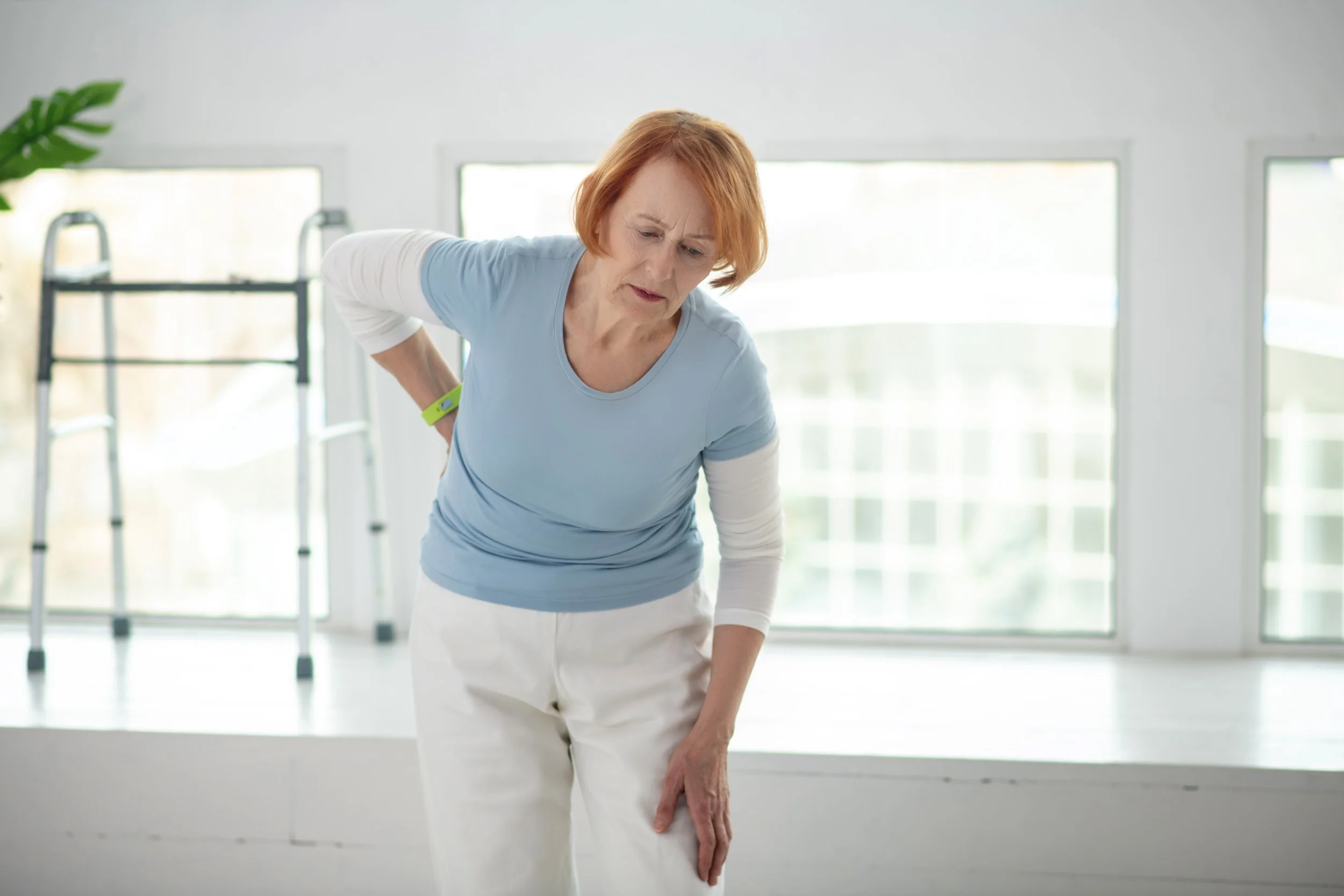
Other Unique Contributors
1. Higher rates of osteoporosis.
Women are significantly more likely to develop low bone density, increasing the risk of compression fractures — sometimes without a dramatic injury.
2. Greater prevalence of certain pain syndromes.
Conditions like fibromyalgia and chronic pain sensitization are more common in women. That can amplify how back pain is perceived and experienced.
3. Pelvic mechanics matter.
Women generally have a wider pelvis and different hip alignment than men. This changes load distribution through the lumbar spine and can predispose to SI joint irritation and facet-related pain.
4. Muscle mass differences.
On average, women have less upper body muscle mass. If strength training isn’t part of the routine, spinal support can decline with age.

How Women Can Best Manage Back Pain
The good news: most back pain is treatable without surgery.
Here’s what I often prioritize in patients with back pain that doesn’t need surgery:
1. Strengthen the posterior chain.
Glutes, hamstrings, spinal extensors, and deep core muscles protect the spine. Resistance training 2–3 times per week is one of the most powerful long-term interventions. This becomes even more critical during and after menopause.
2. Prioritize bone health.
Adequate protein intake, vitamin D optimization, and weight-bearing exercise help preserve bone density. For some women, bone density testing is essential.
3. Address inflammation through lifestyle.
Sleep, stress management, and maintaining a healthy body composition all influence systemic inflammation — and therefore back pain.
4. Modify lifting mechanics.
Caring for children or aging parents often means repetitive bending and lifting. Learning proper hip hinge mechanics and avoiding repeated spinal flexion can prevent flare-ups.
5. Stay active — but intelligently.
Prolonged rest worsens back pain. Structured movement, walking, Pilates, and progressive strength training outperform passive treatments in the long run.
The Bottom Line
Back pain in women is not “just aging.” It’s a predictable intersection of hormones, bone health, muscle mass, biomechanics, and life responsibilities.
When we recognize those unique factors, we can treat back pain proactively — building resilience rather than simply reacting to flare-ups.
Women don’t need to accept chronic back pain as normal. With targeted strength, smart lifestyle strategies, and early intervention, you can stay active, independent, and strong at every stage of life. MyBackHub is the team here to help you do exactly that.
Interesting in joining a supporting community? Join the MyBackHub Membership program today.
About the Author:
Rob Turk, MD, MBA
Chief Medical Advisor, MyBackHub

Rob Turk is the Chief Medical Advisor for MyBackHub, Inc. Dr. Turk has a broad foundation of talent in both medicine and business, previously obtaining his MD at the University of California, San Diego School of Medicine and his MBA at the University of Virginia Darden School of Business. As an entrepreneur and orthopaedic spine surgeon, he has unique and valuable insight on many topics. He is a published author in leading scientific journals such as JBJS and Arthroscopy, has written multiple book chapters, and has been a reviewer for a number of scientific journals. He is passionate about motion preservation and innovation in spine care, health equity, delicious food, and sports.
Disclaimer:
As a service to our readers, MyBackHub provides access to our library of archived content. Please note the date of last review or update on all articles.
No content on this site, regardless of date, should ever be used as a substitute for direct medical advice from your doctor or other qualified clinician.
